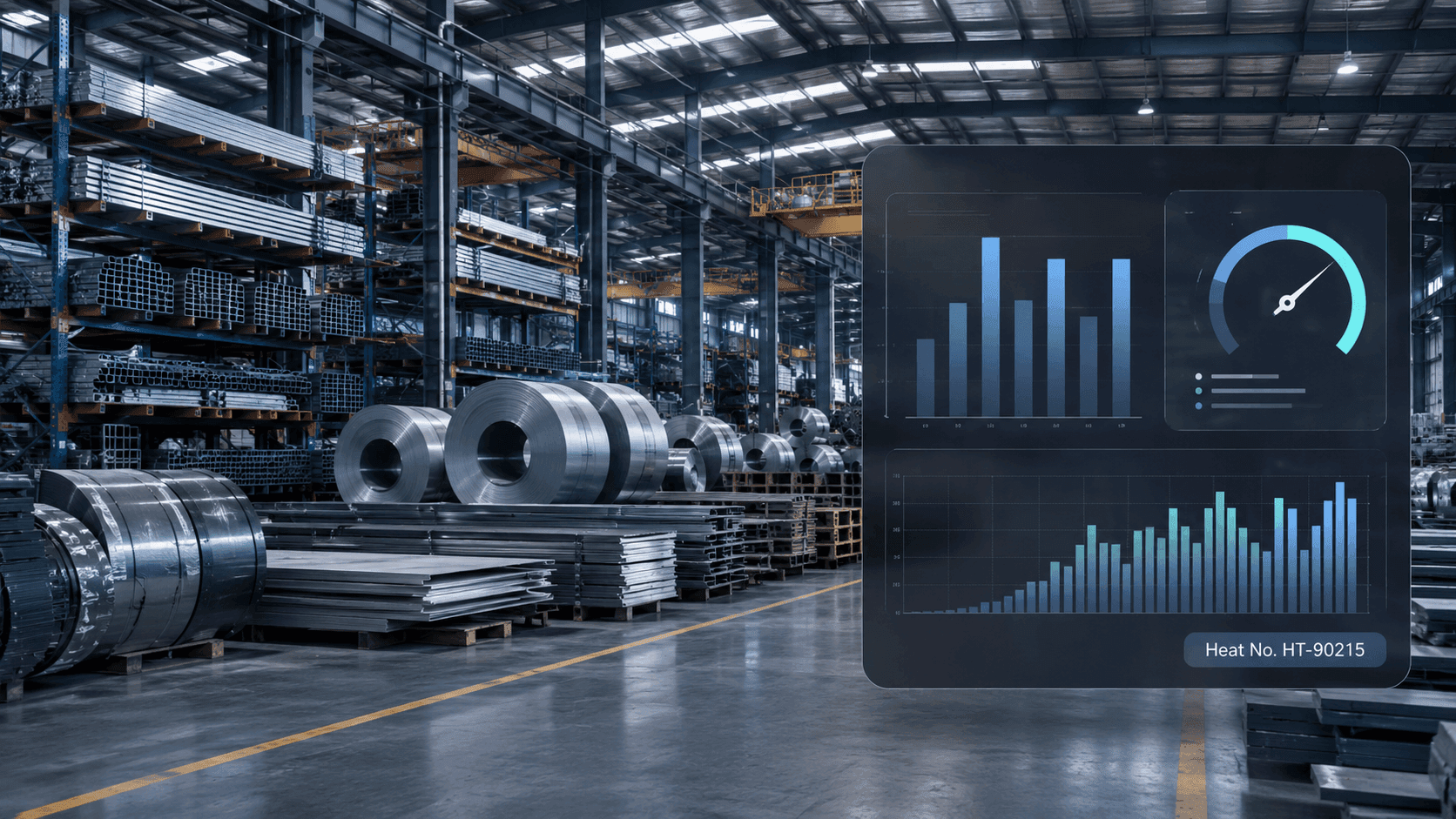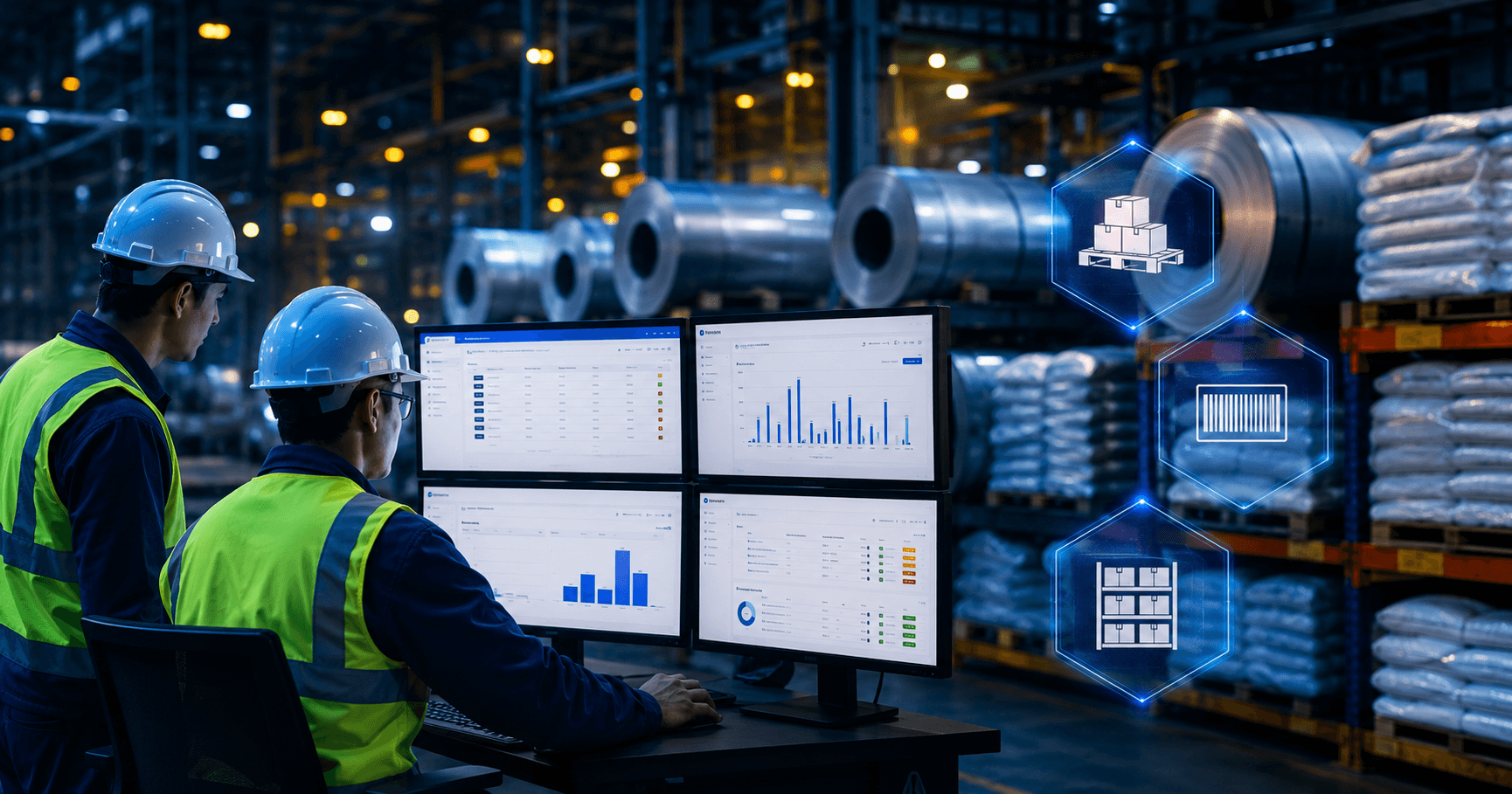
For manufacturers, inventory is not simply a number on a dashboard. Raw materials determine whether production can start, finished goods determine whether orders can ship, and excess stock ties up working capital.
In 2026, manufacturers are putting greater emphasis on supply-chain visibility, predictive analytics and connected ERP systems. The goal is to give purchasing, production and warehouse teams one reliable view of material availability.
What Is Manufacturing Inventory Management Software?
Manufacturing inventory management software tracks raw materials, work-in-progress and finished goods throughout the manufacturing lifecycle. When connected to an ERP, inventory works together with purchasing, production, warehouse, sales and finance instead of living in separate spreadsheets.
5 Common Inventory Problems Manufacturers Face
1. Stock records do not match physical stock
Manual entries and delayed updates make it difficult to know what is actually available.
2. Production discovers shortages too late
When inventory and production planning are disconnected, a missing material can stop a production order.
3. Too much cash is locked in slow-moving stock
Without consumption and ageing visibility, companies may buy materials they already have.
4. Multiple spreadsheets create multiple versions of the truth
Purchasing, warehouse and production may each maintain different stock figures.
5. Imported materials are difficult to cost accurately
Freight, customs, transport and other landed costs can make true material cost different from purchase price.
How ERP-Based Inventory Management Works
- Create a Purchase Order for required material.
- Receive material and record the receipt or GRN.
- Update inventory with the received quantity.
- Check material availability during production planning.
- Issue material to production and track work-in-progress.
- Add finished goods to stock.
- Reduce finished-goods stock after dispatch.
Industry-Specific Inventory Matters
Metal Manufacturing
Metal businesses may need grades, weights, dimensions, market-linked pricing and landed costs.
Plastics Manufacturing
Plastics businesses may track material grades, polymer types, micron levels, batches and production consumption.
Paper Manufacturing
Paper businesses commonly work with GSM, roll or sheet dimensions, weight and material grades.
Where AI Can Improve Inventory Management
AI is increasingly being used for forecasting, anomaly detection and supply-chain optimization. The practical goal is to help teams identify risks and make better decisions from reliable ERP data.
- Predict possible stock shortages.
- Highlight unusual consumption patterns.
- Identify slow-moving inventory.
- Support demand and replenishment forecasting.
- Give managers natural-language access to operational information.
What to Look for in Inventory ERP Software
- Real-time inventory visibility
- Raw material, WIP and finished-goods tracking
- Purchase Order and GRN integration
- Warehouse and stock movement tracking
- Production integration
- Import and landed-cost tracking
- Industry-specific units and attributes
- Searchable dashboards and reports
- Simple workflows for non-technical teams
- AI-assisted insights with appropriate controls
How Matrex ERP Fits the Manufacturing Workflow
Matrex Global positions its ERP for metal, plastics and paper producers and covers a connected material lifecycle from import to export. Its platform covers raw materials, production planning, inventory, sales, GST billing and import-export trade documents, with industry-specific terminology such as metal grades, plastics micron levels, paper GSM, LME and landed cost. It also offers an AI assistant designed to answer questions in plain English. See the full feature list or check pricing to test inventory management against your own data.
Ready to bring inventory, production and trade into one system?
30 days. Full access. No credit card required.
Start Your Free Trial